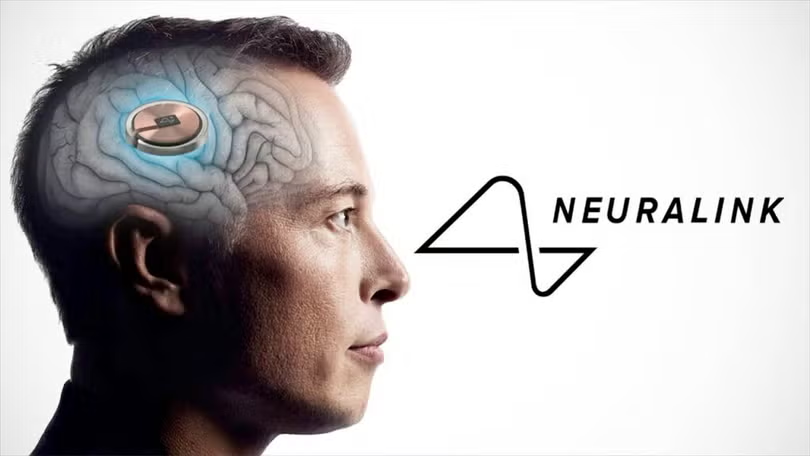
Neuralink’s Second Trial Shows Users Can Control Phones With Thought Alone
The first time Noland Arbaugh used his Neuralink implant to play chess online, the moment was simultaneously awe-inspiring and a little anticlimactic. He moved pieces slowly, the cursor lagging behind intention. It worked, but barely.
Eighteen months later, the picture looks different. Neuralink’s second cohort of trial participants — eight individuals with varying degrees of paralysis — is demonstrating a capability the company has not publicly highlighted: several participants can now operate consumer smartphones without any physical contact, at speeds approaching those of non-disabled users using thumbs.
What the Signal Chain Looks Like
The N1 implant sits in the motor cortex and reads the electrical signatures of intended movement — not actual movement, but the neural precursors to it. The second-generation decoding algorithm has moved beyond simulated physical action: it is learning to interpret higher-level intentions.
The Regulatory Gap
The FDA cleared Neuralink’s Investigational Device Exemption for human trials in 2023 under the category of brain-computer interface devices. That framework was designed for assistive devices. It was not designed for systems that might augment function beyond baseline human capability.
Nobody in the regulatory apparatus is saying Neuralink has crossed that line yet. What several researchers told prompt/power, speaking on background, is that the line is much closer than the current public discourse suggests.

Cassandra writes about technology as a cultural force — what it does to how we live, work, and understand ourselves. She has a background in cognitive science and too many browser tabs open. Based in Vancouver.
Leave a Reply