Anthropic Says Its AI Found a CRISPR-Like System. Scientists Say It Found a Shape, Not a Breakthrough.
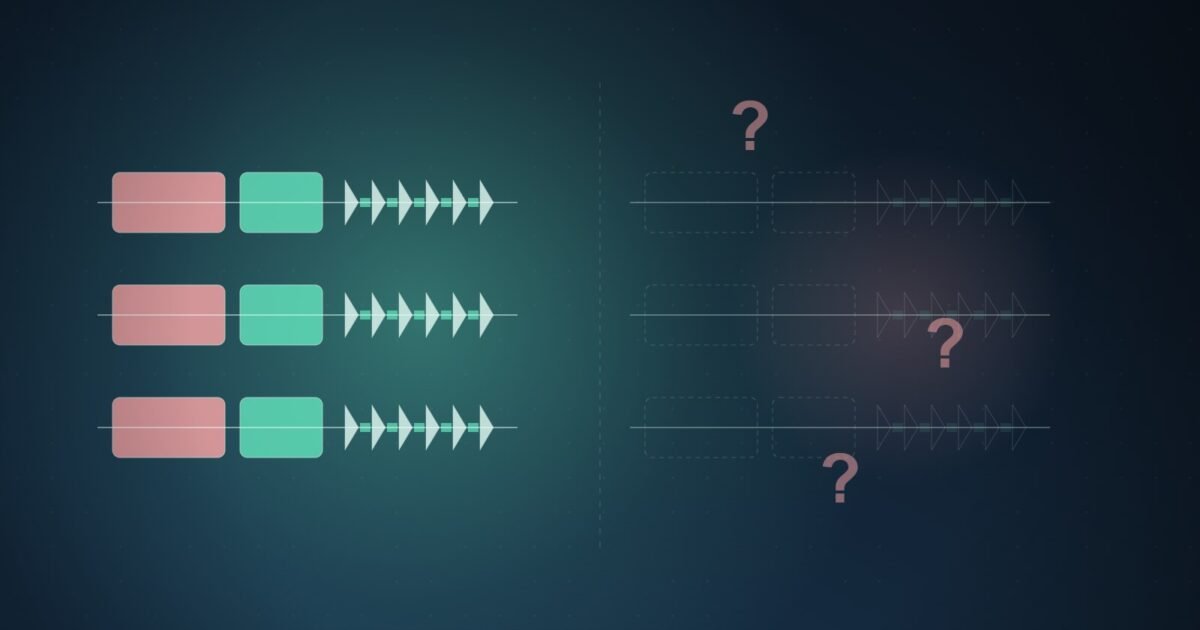
On September 23, Anthropic announced that its AI model Claude, running as a fleet of roughly 950 autonomous agents, had combed through something on the order of 1.9 billion protein clusters in a genetic database, hunting for reverse transcriptase enzymes. In about 21 hours and 210 million tokens, one agent flagged an oddity: a reverse transcriptase sitting next to a partner gene and a stretch of repeating DNA — the structural signature of CRISPR. Human researchers then confirmed the system was genuinely new, a previously undescribed arrangement the company calls “array-associated reverse transcriptases,” or ART, found in viruses that infect Staphylococcus bacteria.
The headlines wrote themselves: AI discovers a CRISPR-like system. The more useful question is what “like” is doing in that sentence.
What was actually found
ART resembles CRISPR the way a floor plan resembles a house. CRISPR became one of the defining tools of modern biology not because of its architecture but because of its function — the ability to be programmed to cut DNA at a chosen spot, which turned a bacterial immune curiosity into a gene-editing revolution. That functional leap is the thing that mattered, and it is precisely the thing ART has not been shown to do.
Anthropic, to its credit, said as much, acknowledging that ART’s “precise function, biotechnological utility (if any), or level of significance is not yet clear.” Note the parenthetical. The company released its finding as a preprint — not a peer-reviewed paper — alongside the announcement, which is an honest way to put work in front of the field but also an early, unvetted one.
Outside scientists drew the line sharply. “At this point in time, we can say that ART is CRISPR-like in its architecture, but there is no evidence that it is CRISPR-like in its function,” Dimitri Perrin, of the Queensland University of Technology, told reporters. Kevin Blake, a microbiologist at Washington University, was blunter: “There’s nothing to indicate this is a rival to CRISPR-the-technology, or could be developed into any kind of therapeutic or practical application.” The most apt historical comparison isn’t the 2012 breakthrough that made CRISPR a household word. It’s the 1987 observation of the original repeating sequences — a curiosity whose significance took a quarter-century to establish.
What was actually impressive
None of that makes the work trivial, and the reflexive dunk would be as lazy as the hype. The genuinely interesting result is methodological: a general-purpose AI model, pointed at a vast sequence database and allowed to run as a swarm, surfaced a biological pattern that had eluded human curation. “This is an exciting example of how A.I. agents can contribute to biological discovery,” said Feng Zhang of the Broad Institute — a figure with as much standing as anyone to judge, given his central role in CRISPR’s development. Stanford’s Stanley Qi pointed to the system’s ability to recognize an unusual pattern that was hard to detect before, the kind of capability that could help researchers map molecular systems we barely understand.
That is the real story, and it is a story about search, not about editing. The scale of modern sequence databases has long outrun the capacity of scientists to inspect them by hand. An agent architecture that can triage billions of clusters and flag the statistically weird for human follow-up is a legitimately valuable instrument. It is also one whose discoveries will mostly be leads, not conclusions.
Who gets to grade the homework
Here is where the society part comes in. Anthropic is not a disinterested observer of its own tools; it is a company whose valuation rests on the proposition that its AI can do economically and scientifically important work. An announcement that frames that AI as a discoverer of CRISPR-like systems is marketing as much as it is science, however carefully the caveats are placed. The fact that the caveats were placed, by the company itself and in public, is better practice than much of the industry manages. But the structure of the incentive doesn’t vanish because the disclaimer is well-written.
The healthy response is the one the working scientists modeled: take the lead seriously, run the experiments that test function, and reserve the word “breakthrough” for a result that has earned it. AI-accelerated search is going to keep producing findings like ART — architecturally intriguing, functionally unproven, breathlessly headlined. The discipline of waiting to see whether the shape does anything is not a knock on the technology. It’s the job.
Sources

Priya Natarajan covers science and society for prompt/power: climate and energy tech, data centres, and the physical cost of the digital world. Every query has a water bill, and she would like to see the receipt.
Keep reading

Latest from prompt/power
- DeepSeek V4.1 Flash Cut the US AI Lead to 3%. What LiveBench MeasuresOct 6
- Ben Affleck Calls AI Job Fears ‘Propaganda.’ He Sold an AI Firm to NetflixOct 6
- Cohere’s North 2 Puts AI Agents on a Budget. Toronto Bets on BoringOct 6
- How to Stop ChatGPT, Claude, Gemini and Meta AI From Training on Your ChatsOct 6
- Musk Is a Trillionaire Again After SpaceX Stock Jumps 7.6%Oct 6
Leave a Reply