
What Is Hugging Face, Actually? A Field Guide to the Hub Behind Open AI
Open the page for Qwen3.8-27B on Hugging Face and the important facts sit in a strip of small grey tags above the fold. A task label, “Image-Text-to-Text.” A license, “apache-2.0.” A download counter reading roughly 7 million last month. Further down, a family tree: 443 fine-tunes, 140 adapters, 20 merges and 1,290 quantized versions, all built by other people from this one model.
Most people who end up on a page like that got there from a link in a news story and left confused. This is a guide to what they were looking at. It matters more now than it did a month ago: Nvidia confirmed on Sept. 3 that it will buy Hugging Face for US$12.93 billion (CA$17.97 billion), which makes the default home of open AI the property of the world’s most valuable chip company.
A GitHub for models, and then some
At its core, the Hub is a place to store and share files, organized as git repositories. TechCrunch counted 3 million models, 500,000 datasets, 1 million applications and 18 million developers at the time of the Nvidia deal. Those come in three kinds of repository.
- Models are the trained weights, the large files that actually do the work, plus configuration and a description.
- Datasets are the training and evaluation data, from Wikipedia dumps to robot arm recordings.
- Spaces are small hosted apps, usually demos where you can try a model in the browser. Hugging Face says static Spaces are free for everyone, while Gradio and Docker Spaces need a paid plan, except that free accounts can host two Gradio Spaces on its shared ZeroGPU hardware.
Leaderboards, which rank models on benchmarks or human votes, are mostly Spaces themselves, run by Hugging Face or by outside groups. Treat each one as a single test from a single referee.
Reading a model page from the top
The name comes first, and it has two halves: who uploaded it, then what it’s called. “Qwen/Qwen3.8-27B” is the official Qwen organization’s release. “unsloth/Qwen3.8-27B-GGUF” is the same model, repackaged by a different team. The owner prefix is your first and best check on whether you’re looking at the original.
The long text below is the model card. Per Hugging Face’s documentation, it’s simply the repository’s README file, and a good one describes intended uses and limitations, training data, and evaluation results. Many are thin. A card that doesn’t say what data the model was trained on is telling you something.
The card’s metadata drives the tags at the top, including a base_model field. That field builds the model tree: whether this repository is a fine-tune, an adapter, a merge or a quantization (a compressed copy that runs on smaller hardware) of something else. If a model you’ve never heard of turns out to be a fine-tune of Qwen or Llama, its license obligations come with it.
Some pages ask you to log in and click “Agree” before you can download anything. Those are gated models: you share your username and email with the author, who can approve you automatically, manually, or later revoke access “without prior notice,” as the docs put it.
The license line is the one that bites
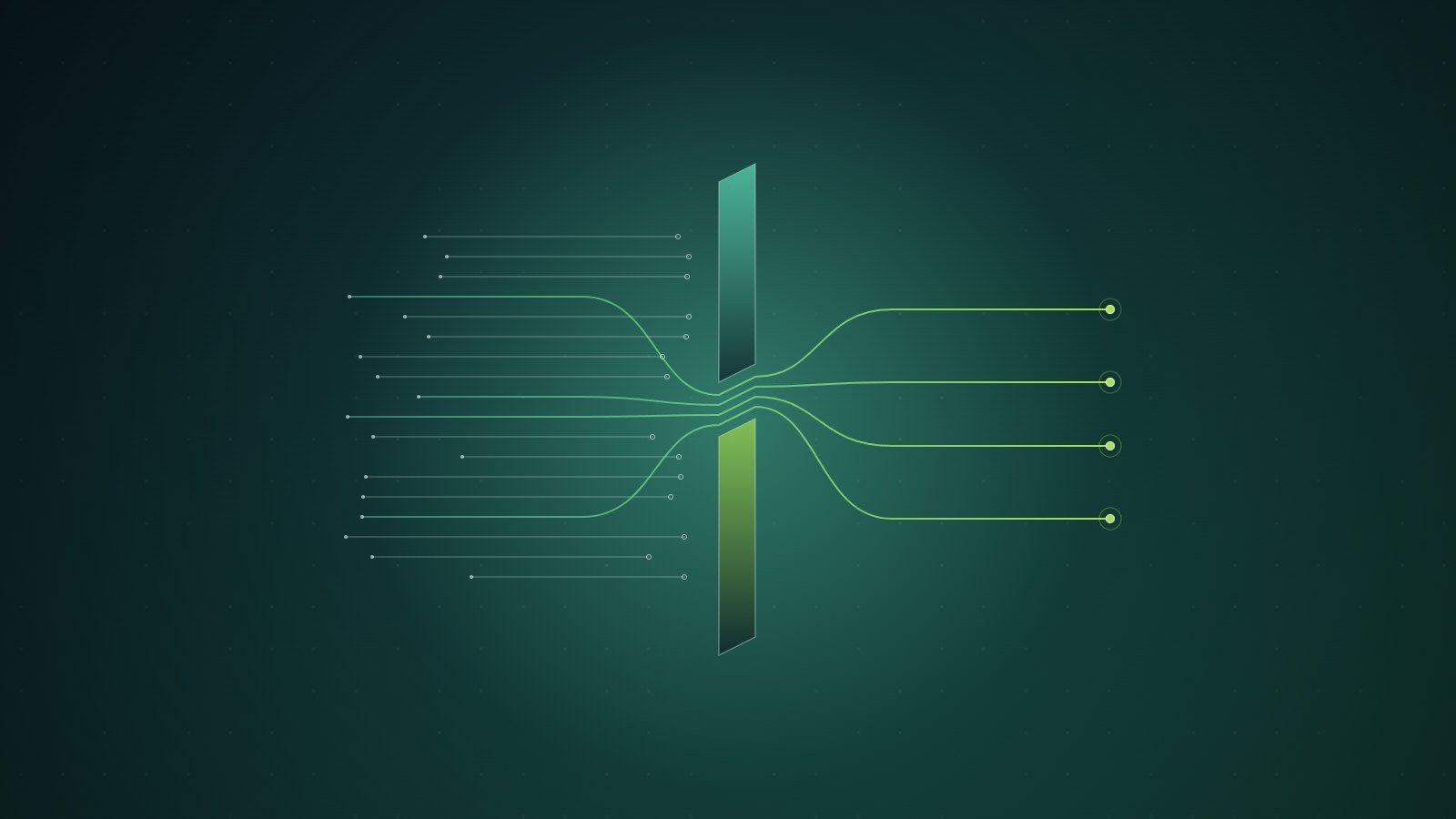
“Open” on Hugging Face means you can download the weights. It doesn’t mean you can do anything you like with them. The license tag draws from a list of more than 80 identifiers, and they fall roughly into four groups.
Permissive. apache-2.0 and mit let you use, modify and sell, with attribution. Alibaba released Qwen 3.8 under Apache 2.0, which goes a long way toward explaining its popularity.
Custom community licenses. llama3.1, gemma and their cousins are free for most people, with conditions. Meta’s Llama 3.1 license requires any company with more than 700 million monthly active users to request a separate license, and anyone who ships a product built on it must “prominently display ‘Built with Llama.'”
Non-commercial. cc-by-nc-4.0 and similar mean research and personal use only.
“other.” This one demands the most care, because it means the author wrote its own terms. MiniMax’s open-weight video model H3 runs under its own community license, and the page notes an application process for users in the U.S., EU, U.K. and South Korea. You only find that by reading past the tag.
What downloads and likes actually tell you
Less than they seem to. Hugging Face counts a download as a server request for a particular file, usually the model’s configuration file, so the figure doesn’t track people. It counts every time a script, a test server or a cloud deployment fetches the model. For GGUF-format repositories, the docs warn, cloning a whole repository can be counted more than once.
That’s why a 22.7-million-parameter text-embedding model, all-MiniLM-L6-v2, posts upward of 240 million downloads in a month. It isn’t a hit with the public. It’s a component quietly wired into countless search and retrieval pipelines that pull it on every build. High downloads mean a model is plumbing. They don’t mean it’s good.
Likes are a vote, and votes can be organized. When we checked the trending list on Oct. 1, one Qwen 2.5 fine-tune sat in the top 30 with 365 likes and zero recorded downloads. Trending itself is a recent-momentum score, so it rewards launches and hype cycles.
Read those signals together and they do say something. On the same Oct. 1 check, 8 of the top 30 trending models had “Qwen” in their names: the official 27B release, a “Flash-Next” sibling, and six fine-tunes or repackagings by other developers. That pattern, one base model and a swarm of derivatives, is what dominance looks like on the Hub.
Why 3 million models is a real number
Developer Ivan Fioravanti’s tally on the Hugging Face blog puts the 3-million mark in August 2026, about 349 days after 2 million, with roughly 2,700 to 3,000 new models a day. About 1.18 million were added in 2025 alone, more than all previous years combined.
Most of those aren’t new models in any meaningful sense. They’re fine-tunes, quantizations and merges, which is the point. The count measures how much remixing is going on. By Fioravanti’s figures, the Qwen family alone has more than 113,000 derivative models, more than Google’s and Meta’s combined. China passed the U.S. in Hub downloads over the past 12 months, at 41%, and independent developers now account for 39% of downloads, up from 17% in 2022.
From an emoji to US$12.93 billion
None of this was the plan. Hugging Face was founded in New York in 2016 by Clément Delangue, Julien Chaumond and Thomas Wolf, and named after the 🤗 emoji. Its first product, per Wikipedia’s history, was a chatbot app aimed at teenagers. When the founders open-sourced the model underneath it, developers cared more about the code than the chatbot, and the company followed them.
The rest is a rising staircase. It co-led the BigScience project that produced the 176-billion-parameter BLOOM model in 2022. Fortune reports that it was valued at US$4.5 billion in 2023, and turned down a US$500 million investment from Nvidia in 2025 that would have valued it at US$7 billion. TechCrunch reported annualized revenue of about US$150 million as of late August. A year after saying no to Nvidia, it said yes at almost twice the price.
Delangue’s stated ambition, quoted by Fortune on deal day: “Our goal is to get to 100 million AI builders in the next few years.”
What Nvidia changes, and what it says it won’t
The deal is expected to close in the first half of 2027, pending regulatory approval, so for now nothing on the Hub has changed. Nvidia has made its promise in public. “Nvidia compute will not be required to build on or deploy through Hugging Face,” Jensen Huang said, per TechCrunch, adding that developers will choose “the clouds and inference service providers they want and the computing platforms they want.”
Our read: the commitments that are easy to verify are the ones to watch. Licenses stay with model authors. The Hub’s real power over the industry lies in its defaults: which hardware is suggested in a deployment button, which inference providers appear in the box on each model page, which formats get first-class support. We covered how the bidding got here, including OpenAI’s earlier attempt to buy in, in our analysis of the deal.
So the next time you land on a model page, look at the inference-provider box on the right. When we checked Qwen3.8-27B, Novita was among the companies listed there. If that box starts to fill with Nvidia’s own services after the deal closes, it will show more clearly than any press release how open the Hub has stayed.
Sources
- Hugging Face: Qwen/Qwen3.8-27B model page
- TechCrunch: Nvidia confirms it will buy Hugging Face for $12.9 billion
- Hugging Face Docs: Model cards
- Hugging Face Docs: Licenses
- Meta: Llama 3.1 Community License
- Hugging Face Docs: Models download stats
- Hugging Face Blog (Ivan Fioravanti): Three million models and counting
- Wikipedia: Hugging Face
- Fortune: Hugging Face goes from a scrappy startup to $13 billion Nvidia acquisition
- Yahoo Finance: Nvidia confirms $13 billion acquisition of Hugging Face
- The Decoder: Qwen 3.8 under Apache 2.0

David Mensah covers software and platforms for prompt/power: apps, browsers, developer tools and the open web. He firmly believes every "simple" settings menu is hiding a second, worse settings menu.
Keep reading



Latest from prompt/power
- DeepSeek V4.1 Flash Cut the US AI Lead to 3%. What LiveBench MeasuresOct 6
- Ben Affleck Calls AI Job Fears ‘Propaganda.’ He Sold an AI Firm to NetflixOct 6
- Cohere’s North 2 Puts AI Agents on a Budget. Toronto Bets on BoringOct 6
- How to Stop ChatGPT, Claude, Gemini and Meta AI From Training on Your ChatsOct 6
- Musk Is a Trillionaire Again After SpaceX Stock Jumps 7.6%Oct 6
Leave a Reply