
AI’s Electricity Bill in 6 Numbers, and Why Nobody’s Estimates Agree
In April 2025, the International Energy Agency put a number on AI’s power demand that got quoted everywhere: data centres would use around 945 terawatt-hours a year by 2030. A year later, in April 2026, the agency published a follow-up report that reported a 17% jump in 2025, nudged the 2030 projection to 950 TWh, and cited per-query energy figures a sixth or less of the one it had published 12 months earlier.
That kind of revision is normal for these estimates, not a sign that anyone got it badly wrong. The IEA is the most-cited source on AI’s electricity use, and its own first report admitted there is “substantial uncertainty both about data centre consumption today and in the future.”
Below are six figures from the IEA’s two reports, each with the reason it’s contested. They’re for anyone who has seen “AI uses as much power as a country” in a headline and wanted to know which parts hold up. We took every figure from the IEA’s own pages and PDFs. The commentary on why each one is shaky is ours.
1. 485 TWh: what data centres used in 2025
The IEA’s 2026 executive summary puts global data-centre electricity use at 485 TWh in 2025, up 17% in a year. Global electricity demand overall grew about 3%, according to the agency’s press release. For comparison, the earlier report estimated 2024 at 415 TWh, about 1.5% of the world’s electricity.
Why it’s contested: this is a past figure, yet it’s still an estimate. There is no global meter for data centres, and the IEA’s own recommendations include “more systematic energy consumption disclosures” from the tech sector, which tells you the disclosures it needs don’t exist yet.
2. 950 TWh: the 2030 projection, roughly Japan
The Base Case has data-centre consumption “roughly doubling from 485 TWh in 2025 to 950 TWh in 2030, accounting for around 3% of global electricity demand.” When the IEA’s first report landed on 945 TWh, it described that figure as “slightly more than Japan’s total electricity consumption today.” That’s where the country comparison you’ve seen comes from.
Why it’s contested: the projection held almost steady while its starting point rose, which means the expected growth rate came down. Part of the reason, according to the IEA, is that “bottlenecks across the value chain” (gas turbines, transformers, chips, high-bandwidth memory) “are reducing the likelihood of more aggressive near-term scenarios.” So the forecast is limited partly by how fast physical equipment can be built, and only partly by how much AI people want to use.
3. 465 TWh: the slice that is actually AI
The phrase “AI’s electricity bill” usually covers the whole data-centre sector, which also runs email, streaming, banking and cloud storage. The 2026 report breaks AI out: electricity use at AI-focused data centres grew 50% in 2025, and in the Base Case it “increases by more than threefold to 2030, reaching around 465 TWh,” according to the full report. That’s about half of the 2030 total.
Why it’s contested: “AI-focused” describes a type of facility, not a type of workload. A conventional cloud campus also runs AI inference, and an AI campus also hosts ordinary jobs. The 2025 report measured the same thing a different way, saying accelerated servers account for “almost half” of the projected increase. The two definitions point the same way, but they don’t count the same thing.
4. 0.34 Wh: one ChatGPT question, by OpenAI’s count
This is the number that moved the most. In 2025, the IEA estimated that querying an AI model took “around 2 watt-hours for language generation,” while warning that a “lack of data on the energy consumption of commercial models inhibits assessment.” The 2026 report instead cites company figures: “Google reports that the median Gemini text prompt consumes 0.24 Wh; OpenAI puts the average ChatGPT query at 0.34 Wh.”
The IEA’s plain-language version: “Simple text queries now typically consume less electricity than running a television over the same period of time.” It credits efficiency gains, with energy use per AI task dropping “by at least an order of magnitude annually in recent years.”
Why it’s contested: those numbers come from the companies themselves and haven’t been independently audited, and a median and an average aren’t the same measure. Simple text is also the cheapest thing a model does. The same report warns that video generation “can require hundreds to thousands of times more energy per query than simple text generation.” Agents that run for hours, the kind the big labs are now selling, burn through “orders of magnitude more tokens per interaction than a simple query.” Each query is getting more efficient, but the queries are getting bigger.
5. 16 GW: how much power Alberta was asked for
Global averages hide where the strain is. The 2025 report found that data centres already use around 20% of Ireland’s metered electricity and 25% of Virginia’s, and that AI campuses draw as much power as aluminium smelters “but they are much more geographically concentrated.”
The 2026 report includes a Canadian example. In Alberta, provincial efforts to attract data centres “led to connection requests totalling 16 GW, which exceeded the province’s peak demand,” prompting the grid operator to impose a temporary 1.2 GW cap. In Texas, ERCOT has received data-centre interconnection requests of 160 GW.
Why it’s contested: a connection request is not a building. Our read: developers can file in several places to see which grid moves fastest, so a queue can overstate real demand by an unknown amount. We’d also argue that Alberta’s cap matters more than the 16 GW figure, because the cap is what an operator decided it could actually deliver.
6. 700 to 1,700 TWh: the range in the IEA’s own scenarios
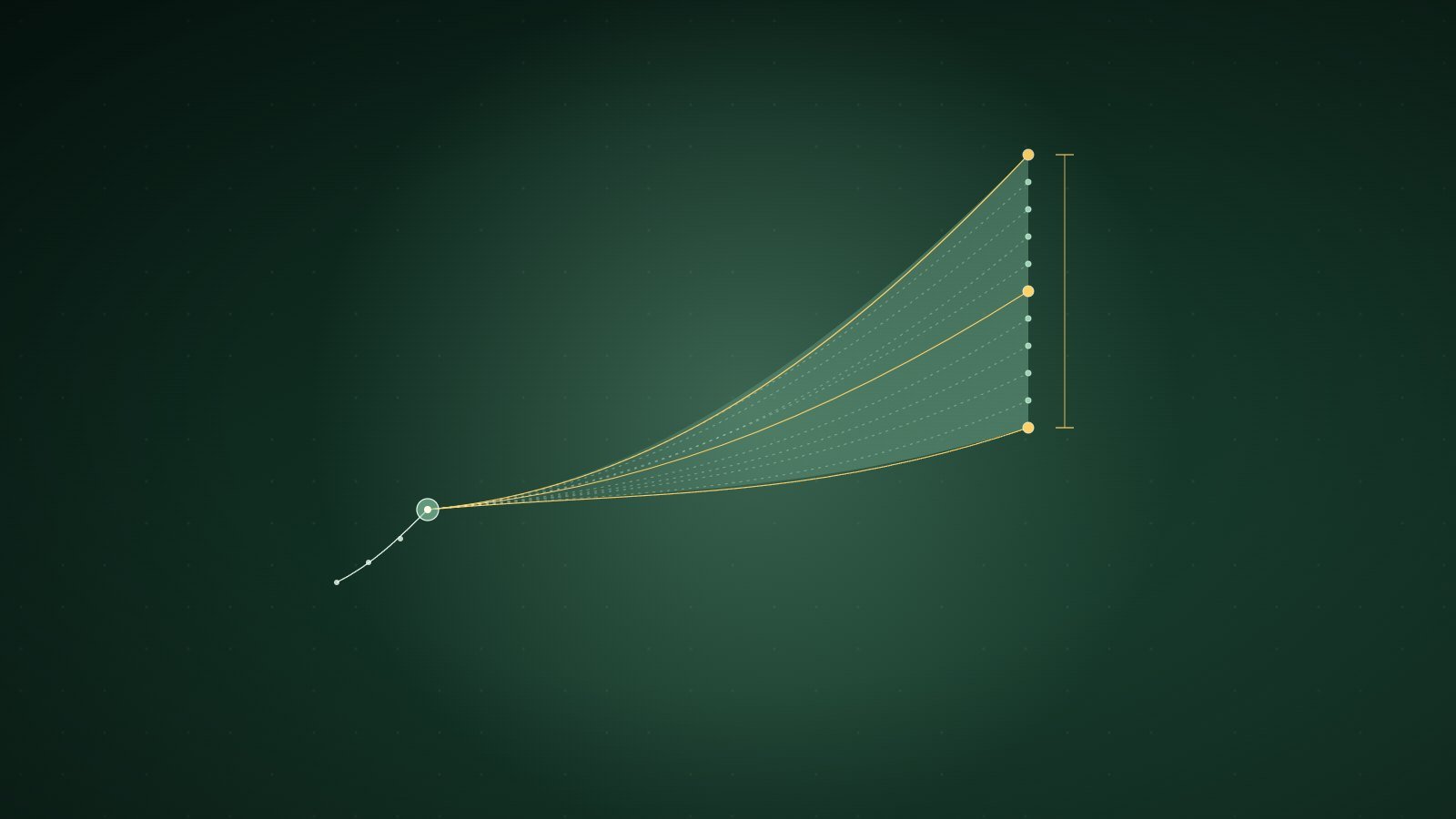
Before you quote any single projection, look at the range around it. Across its scenarios, the IEA’s first report puts 2035 data-centre demand anywhere from about 700 TWh (the “Headwinds” case, where growth stalls) to more than 1,700 TWh (the “Lift-Off” case). At the high end that’s around 4.4% of global electricity, and at the low end under 2%.
Why it’s contested: the IEA explains the spread itself. The range reflects “uncertainties on the uptake and economics of AI; the outlook for efficiency improvements of models and chips; and in how quickly energy sector bottlenecks can be resolved.” Put more simply, nobody knows yet how much people will pay for AI, how fast chips will improve or how fast utilities can build. The difference between the low and high cases, about 1,000 TWh, is more than the entire sector’s projected use in 2030.
Most headlines quote one number from that range. The Alberta grid operator, which actually has to keep the lights on, set its cap at 1.2 GW.
Sources

Priya Natarajan covers science and society for prompt/power: climate and energy tech, data centres, and the physical cost of the digital world. Every query has a water bill, and she would like to see the receipt.
Keep reading

Latest from prompt/power
- Francis Halzen Wins the 2026 Physics Nobel for a Telescope Made of IceOct 6
- Ben Affleck Calls AI Job Fears ‘Propaganda.’ He Sold an AI Firm to NetflixOct 6
- Cohere’s North 2 Puts AI Agents on a Budget. Toronto Bets on BoringOct 6
- How to Stop ChatGPT, Claude, Gemini and Meta AI From Training on Your ChatsOct 6
- Musk Is a Trillionaire Again After SpaceX Stock Jumps 7.6%Oct 6
Leave a Reply