DoorDash Wants You to Stop Opening the App
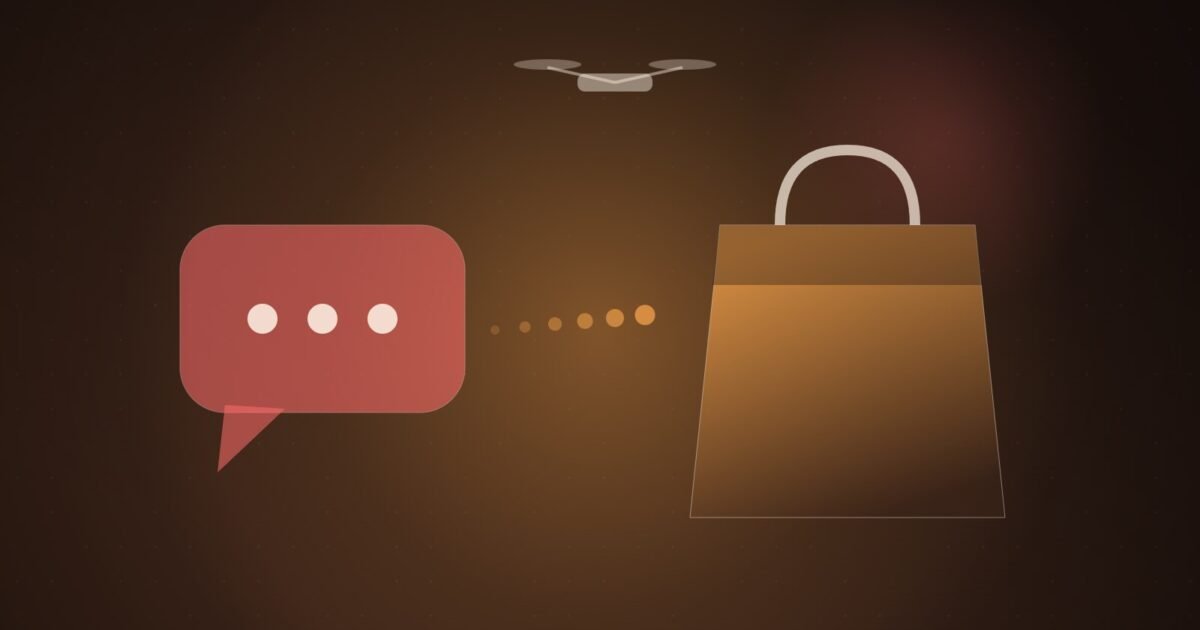
On September 30, DoorDash announced that the most important part of ordering dinner is one you’ll soon never see. The company unveiled Ask DoorDash, a text-based ordering agent that works inside Apple’s Messages app: type “order my usual” or “something cheap and close,” and the assistant searches nearby restaurants, builds a cart, and checks you out without ever opening the DoorDash app. A beta waitlist opened the same day for U.S. iPhone users.
It is the cleanest expression yet of what the industry has started calling agentic commerce — the idea that you should describe what you want in plain language and let software do the rest. DoorDash co-founder Stanley Tang, speaking at the company’s Dash Forward event, framed the push as a way to stay ahead of Uber Eats and Grubhub by letting people handle tasks without navigating apps at all. On paper it’s genuinely convenient. The agent remembers past orders, juggles group orders with different dietary needs, and will reportedly send you photos of dishes from restaurants it suggests.
But convenience in food delivery has always been the Trojan horse. The app interface you’re being invited to skip is also the place where you see the fees before you pay them, compare three taco spots instead of accepting the first, and notice that the “free delivery” order somehow became $38. Strip the interface down to a chat bubble and you strip out the moment of comparison. An agent optimizing for “my usual” is an agent optimizing for habit — which is to say, for DoorDash’s margins as much as your appetite. Notably, none of the launch coverage disclosed what the text-ordering flow costs, how fees surface inside a conversation, or how the agent decides which restaurant to recommend when several match. Those are not footnotes. In a business built on service fees, delivery fees, and surge pricing, how the menu of options gets narrowed for you is the entire game.
The second announcement is the one that gets the headlines and deserves the most salt: DoorDash Air, a drone-delivery pilot launching with select Northern California restaurants, including Chipotle and Popeyes. DoorDash says about 80% of typical U.S. restaurant orders are small and light enough to fly, and that early tests averaged under five minutes — with the explicit caveat that the time is not guaranteed. Hold that figure loosely. Drone delivery has been a perennial “coming soon” since Amazon’s Prime Air promised it in 2013; Alphabet’s Wing and others have run real but narrow suburban pilots for years without anything resembling nationwide service. A pilot with two fast-food chains in one region is a press release, not a logistics transformation. The regulatory, airspace, and noise constraints that have grounded everyone else’s ambitions have not gone away for DoorDash.
The friction it removes is also the friction that protected you.
Underneath the two consumer-facing items sits the more telling corporate plumbing. DoorDash also introduced DashOS, a platform bundling ordering, reservations, loyalty, and marketing for restaurants; DashBuddy, an AI assistant for its Dashers; and a corporate-ordering connector built on the Model Context Protocol, the emerging standard that lets outside AI agents plug into a service. Read together, these aren’t three gadgets — they’re DoorDash trying to become the layer that other software talks to when it wants food, the same way it now wants to be the layer you talk to. The company that controls the connector controls the defaults, and defaults are where the money is.
The honest read is that Ask DoorDash will probably work, and work well, for the narrow task of reordering the thing you already order. That’s useful. It’s also a smaller promise than the framing suggests, and it comes with a quiet trade: every order you place without looking is an order placed on DoorDash’s terms, priced in a conversation that was designed to feel too frictionless to question. The drones, meanwhile, can wait for the second flight before we believe the first one scaled.
If you join the waitlist, join it clear-eyed. The app you’re being asked to abandon was, among other things, the place you could still see the bill.
Sources

Lauren Smith covers consumer apps and services for prompt/power: streaming, subscriptions, e-commerce and everyday tech worth your money. She keeps a running tally of every free trial that quietly turned into a subscription.
Keep reading
Latest from prompt/power
- Gemini’s Free Tier Shrinks Oct. 9: What You Keep and What Costs ExtraOct 5
- How to Read an AI Company’s S-1: The 7 Numbers That MatterOct 5
- OpenAI’s Safety Lead Quit Over Culture. California’s AG Was Already InOct 5
- When an AI Agent Breaks In, Who Answers for It?Oct 5
- The New AI Models Don’t Talk. They Decide.Oct 5
Leave a Reply