The FDA Just Cleared an App to Dose Insulin Without a Doctor Signing Off. The Data to Back It Up Isn’t Public Yet.
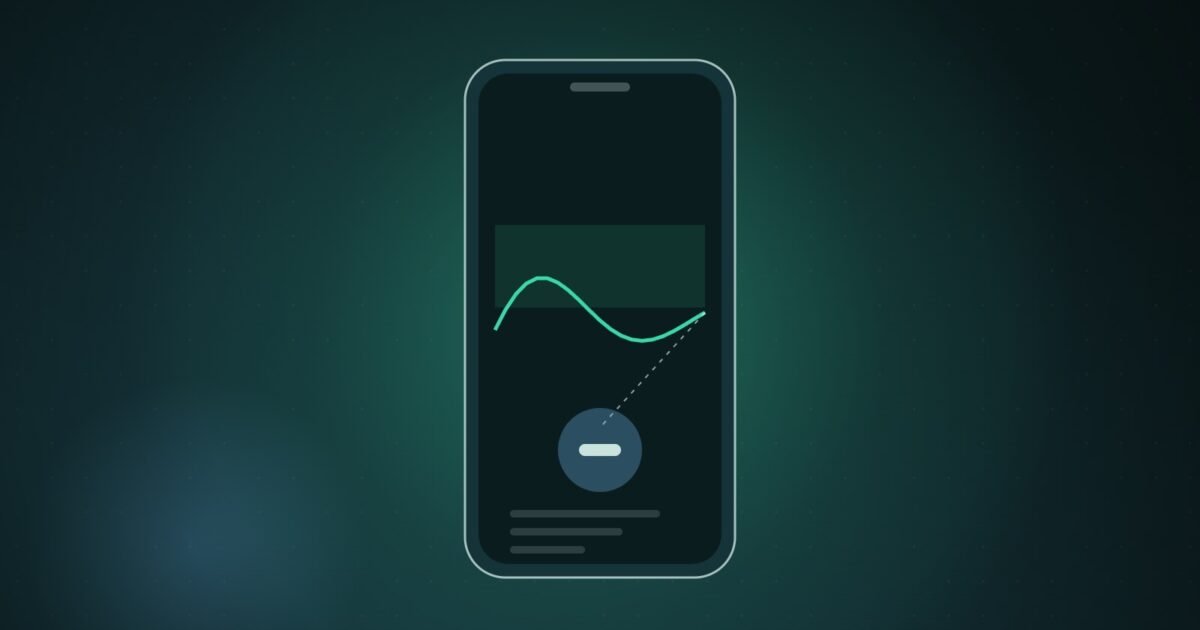
On September 28, an Israeli digital-health company called DreaMed Diabetes announced that the U.S. Food and Drug Administration had cleared MODI, a prescription app that reads a patient’s continuous glucose monitor (CGM) and their logged insulin injections and then tells them, in units, how to adjust their own dose. No clinician has to pre-set the parameters. No clinician has to approve each individual recommendation. For adults with type 2 diabetes on multiple daily injections, that is a meaningful first — and it is worth looking at carefully before celebrating it.
The clearance, confirmed in trade coverage by HIT Consultant and MedCity News, covers adults 18 and older who use long-acting (basal) insulin, alone or alongside rapid-acting mealtime (bolus) doses. That population is large and chronically underserved. Pumps and automated insulin delivery have transformed type 1 care, but the majority of insulin users inject, and DreaMed’s own materials note that many of them sit above their glucose targets for months between dose adjustments — the slow drift clinicians call therapeutic inertia.
“Today we can track glucose continuously, but insulin treatment is still only adjusted months apart,” DreaMed co-founder and CEO Eran Atlas said in the company’s announcement. “Data alone does not improve the health of patients; value is created when data is transformed into a timely, personalized recommendation patients can act on.”
That is a genuinely reasonable thesis. The gap between abundant CGM data and the human bottleneck of a quarterly office visit is real, and automating titration for injection users is a logical next step after a decade of closed-loop pumps. DreaMed is not a fly-by-night operation either: it spun out of Schneider Children’s Medical Center in 2014, has drawn about $35.5 million in equity and grants, with Medtronic among its investors, and already holds an earlier FDA clearance for Advisor Pro, a physician-facing tool for type 1 diabetes. (The MODI name honors Modi Amir, a technology professional from Kibbutz Kfar Aza who was killed on October 7, 2023.) The move from “software that advises the doctor” to “software that advises the patient directly” is the real story here.
And that is exactly where the skepticism has to live.
What a 510(k) clears — and what it doesn’t
MODI came through the FDA’s 510(k) pathway, which clears a device by showing it is “substantially equivalent” to something already on the market. It is not the rigorous De Novo or premarket-approval route the agency reserves for genuinely novel high-risk devices. A 510(k) can be the right call for well-understood technology. But it also means the public clearance did not arrive with a headline randomized trial attached. Neither the company’s announcement nor the trade coverage cited specific efficacy numbers — no time-in-range improvement, no hypoglycemia rate, no head-to-head against standard care.
For a product whose entire proposition is that it changes insulin doses without a clinician in the loop, the absence of published outcome data is not a minor footnote. Insulin is among the most dangerous drugs in common use; an over-correction can cause a hypoglycemic emergency within hours. DreaMed says MODI’s algorithm is designed to titrate conservatively, and the prescription requirement means a doctor is involved at the outset. But “a doctor wrote the initial script” is a different safeguard than “a doctor reviews each change,” and patients and payers deserve to see the trial that justifies the trade.
The regulatory weather
The clearance also lands in a year when the FDA has been visibly loosening its grip on digital health. In January the agency rewrote its guidance on general-wellness products and clinical-decision-support software to pull more tools outside active oversight — a shift law firms uniformly described as the FDA “cutting red tape.” MODI is a cleared medical device, not a wellness gadget, so it sits on the regulated side of that line. But the direction of travel matters: a more permissive agency clearing a more autonomous product is a combination that rewards close attention, not reflexive enthusiasm.
None of this means MODI doesn’t work. It may well help people who currently get almost no titration support between appointments, and that would be a real public-health gain. The honest position for now is narrower: the FDA has signed off, the clinical evidence is not yet in front of us, and a dosing recommendation you can act on without a doctor’s sign-off is precisely the kind of tool whose published data should arrive before the marketing does.
Sources
- DreaMed press release: FDA clearance for MODI (Sept. 28, 2026)
- HIT Consultant: FDA clears DreaMed MODI (Sept. 30, 2026)
- MedCity News: DreaMed wins FDA clearance
- Medscape: FDA clears app integrating glucose data, insulin injections
- Arnold & Porter: FDA cuts red tape on clinical decision support software

Casie Stewart covers the creator economy, social platforms and wellness tech for prompt/power: who gets paid, who gets seen, and what the algorithm is really asking of the people who feed it. She has been publishing online since 2005, long before "creator" was a job title, and has spent most of that time on the other side of the platforms she now writes about. Based in Toronto. Her rule for any new app: if it promises to save you time, check how much of it you just spent reading the onboarding.
Keep reading



Latest from prompt/power
- Gemini’s Free Tier Shrinks Oct. 9: What You Keep and What Costs ExtraOct 5
- How to Read an AI Company’s S-1: The 7 Numbers That MatterOct 5
- OpenAI’s Safety Lead Quit Over Culture. California’s AG Was Already InOct 5
- When an AI Agent Breaks In, Who Answers for It?Oct 5
- The New AI Models Don’t Talk. They Decide.Oct 5
Leave a Reply