
Norway Wants AI Glasses Out of Parks and Gyms. What Meta Owners Should Know
Norway’s government wants AI glasses out of parks, beaches, gyms, schools and kindergartens, at least for now. On Oct. 5 the Ministry of Digitalisation and Public Governance announced it will propose a temporary ban on AI glasses in selected places, and set up an expert group to advise on permanent national rules for what it calls body-worn technology.
The proposal still has to be drafted and passed by the Storting, Norway’s parliament. The ministry says the work is a high priority and that it will bring a bill back to lawmakers as quickly as it can. No date, no penalties and no list of covered devices have been published yet.
Digitalisation Minister Torgeir Micaelsen framed it around a specific fear: being filmed by someone who looks like they are just wearing sunglasses.
“I am worried that powerful new technology is being introduced where people risk being photographed, filmed or recorded without knowing it.” Torgeir Micaelsen, Norway’s minister of digitalisation and public governance (our translation)
A temporary ban, he said in the ministry’s release, would buy time for a thorough study and an informed public debate before anything permanent.
Where Norway’s AI glasses ban would apply
The release sorts the candidate locations into three groups. It uses the words “may” and “could” throughout, so treat this as the government’s working list, not final law:
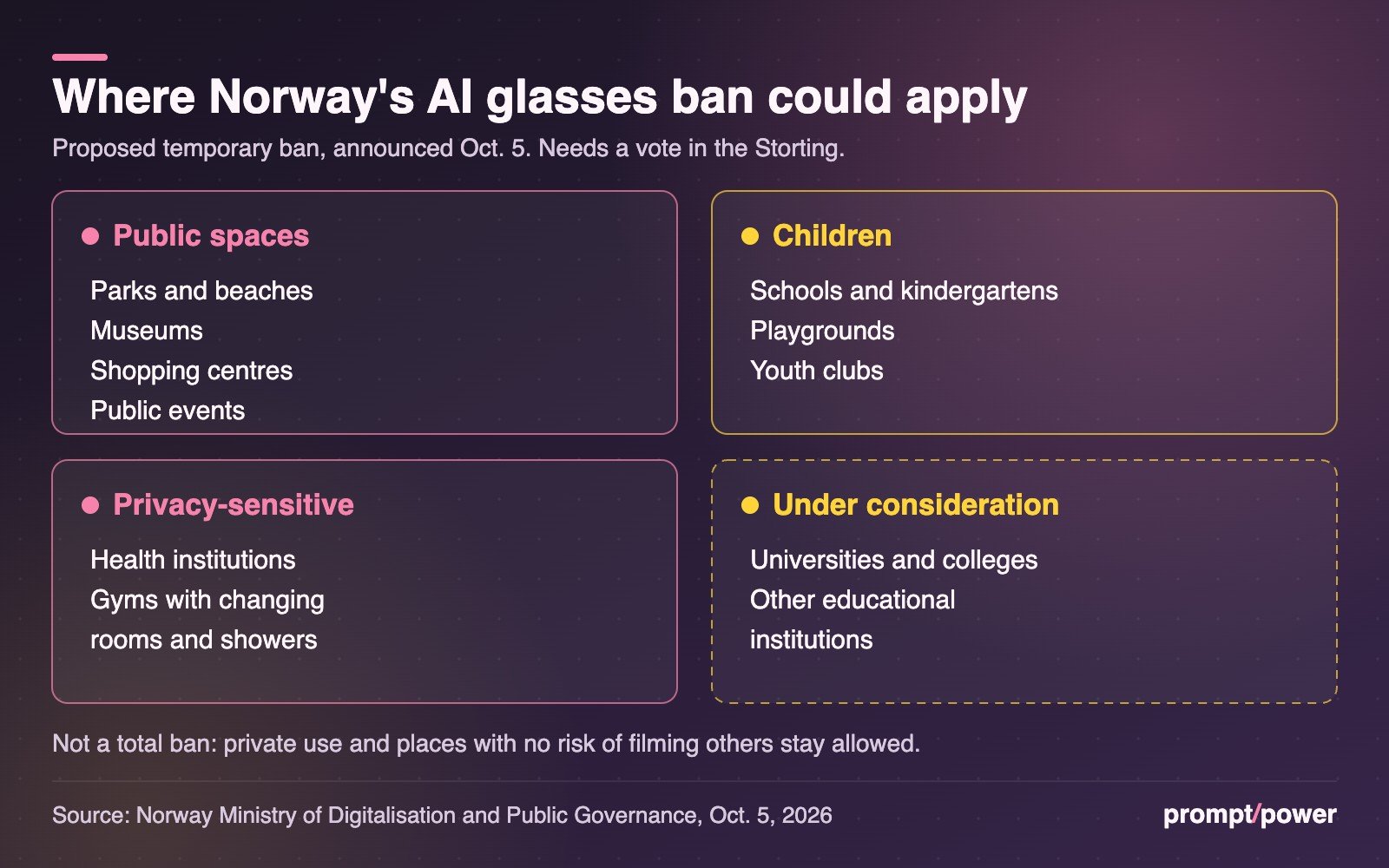
- Places the public regularly passes through: parks, beaches, museums, shopping centres and public events.
- Places and events for children: schools, kindergartens, playgrounds and youth clubs.
- Places where privacy matters most: health institutions, and gyms with changing rooms and showers.
The government will also consider whether universities, colleges and other educational institutions belong on the list. According to The Associated Press, Norway is weighing exceptions for “socially beneficial uses” involving vulnerable groups. That matters for blind and low-vision users, for whom camera glasses that describe the world aloud are an accessibility tool, not a gadget. The release itself does not spell those exceptions out.
Some Norwegian institutions are already ahead of Oslo’s politicians. Oslo schools and the energy company Equinor have banned wearable recording tech in their own buildings, Reuters reported via The Irish Times.
Temporary, yes. Total, no
If you saw Fortune’s headline calling this a “temporary but total ban,” the government’s own text says otherwise. The release states plainly that it is not planning a total ban on AI glasses or other body-worn technology, and that the devices should remain usable in some places and for purely private use, such as when there is no risk of filming people without their consent.
So the accurate version: temporary, and limited to selected places. How “selected” ends up being defined is the whole fight. Parks, beaches and shopping centres together cover a lot of a normal Saturday.
Norway is moving in the opposite direction from California. On Oct. 1 Governor Gavin Newsom vetoed SB 1130, which would have penalized secretly recording people with wearable devices, arguing it defined those devices too broadly and duplicated existing law, TechCrunch reported. The same report noted Meta sold more than seven million glasses in the previous year.
Private businesses aren’t waiting for either. MSC Cruises bars smart glasses from its ships’ public areas, allowing them only in cabins and ashore. The UK Cinema Association brought in restrictions in August, and Dutch eyewear chain Hans Anders paused Ray-Ban Meta sales, the AP reported.
What Ray-Ban Meta owners in Canada should do
Nothing in Norway’s plan changes the law here. Canadian privacy statutes mostly govern how organizations collect data, not what an individual does with a camera on a public sidewalk, Toronto privacy lawyer Brent Arnold told CP24 in August; outside narrow voyeurism offences in the Criminal Code, he called it a gap. Regulators are watching, though. The Office of the Privacy Commissioner of Canada signed on to a June G7 data protection communiqué that flagged “the covert collection of individuals’ images and voices without their knowledge” by smart glasses. And the Canadian Armed Forces in July barred AI glasses from operations and security zones.
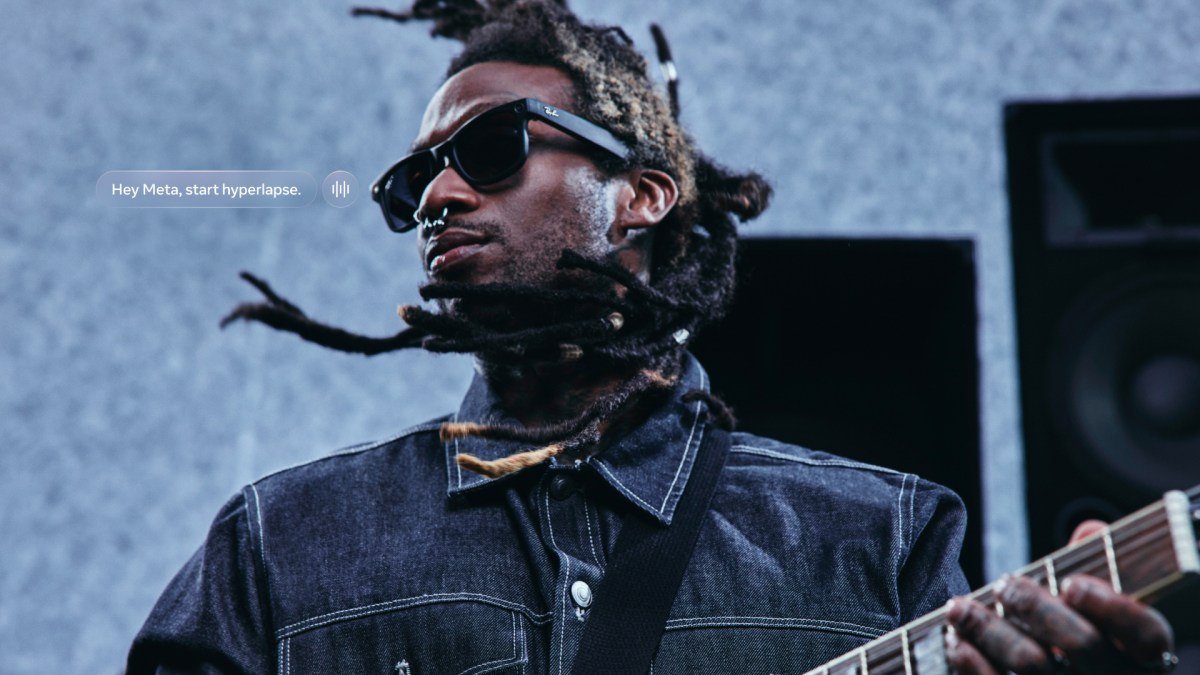
If you own Ray-Ban Meta, Oakley Meta or Meta Ray-Ban Display glasses, a few practical points:
- Travelling to Norway: nothing is banned yet. Check again before any trip next year, since the rules could land quickly once a bill is tabled.
- Don’t defeat the light. The camera already refuses to start if the capture LED is covered. Meta’s VP of AR Alex Himel wrote on Threads, according to 9to5Google, that a fix rolling out since late August also stops a recording if the light is covered mid-capture. Keep your firmware current.
- Follow the venue, not the law. Gyms, clinics, cinemas and cruise lines can set their own rules on private property. Swap to prescription lenses or a regular pair where cameras are unwelcome.
- Say it out loud. Meta’s own guidance, cited by the AP, tells wearers to stop recording if anyone objects.
Shopping for a pair? Our guide to the four kinds of AI glasses covers which models have cameras at all; audio-only frames sidestep this whole debate. And the data question doesn’t stop at the lens, as leaked Muse prompts showed with Meta’s assistant.
One line in Micaelsen’s release is worth sitting with. A society where people worry about hidden recordings, he said, “can feel unsafe and make us pull back” (our translation again). His list starts with playgrounds.

Yuna Park covers mobile and gadgets for prompt/power: phones, accessories, consumer electronics and the supply chains behind them. Her favourite test for any new phone: would you notice if someone swapped it for last year's?
Keep reading



Latest from prompt/power
- Thomson Reuters Won the First AI Training Appeal. Footnote 7 Is the CatchOct 7
- The Family Safe Word: How to Beat AI Voice-Clone Emergency ScamsOct 7
- Reflection AI’s Beam, Explained: The 501B Open-Weight Model Aimed at ChinaOct 7
- Your SSN or SIN Leaked in a Breach? Do These 8 ThingsOct 7
- Apple’s Oct. 13 Event Rumour, Plus iPhone Duo Pre-Order Dates for CanadaOct 7
Leave a Reply