The iPhone 18 Pro’s Best New Feature Is an Aperture That Actually Moves
The iPhone Duo got the headlines on September 9, but the phone most people will actually buy this fall is the iPhone 18 Pro, and its best new feature is one photographers have been asking for since the iPhone first became the world’s most popular camera.
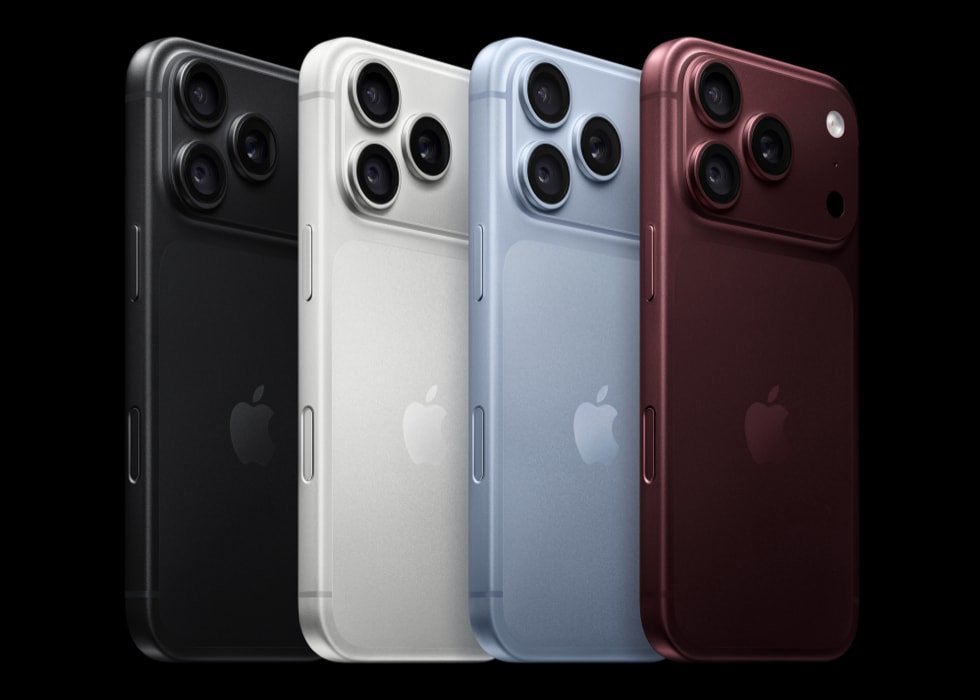
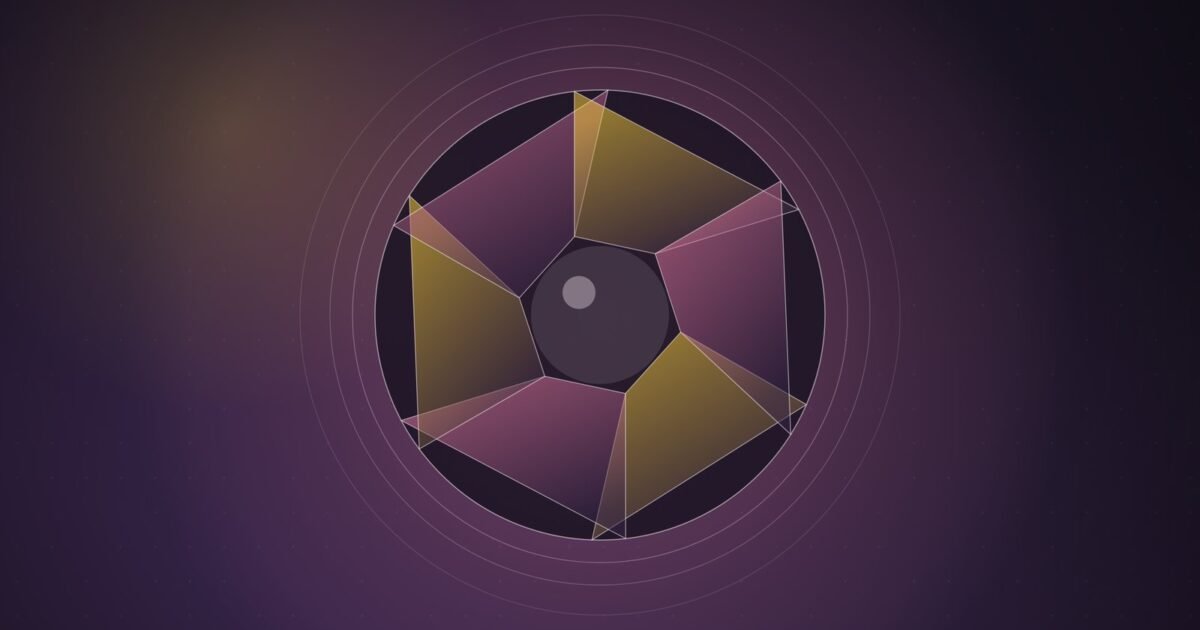
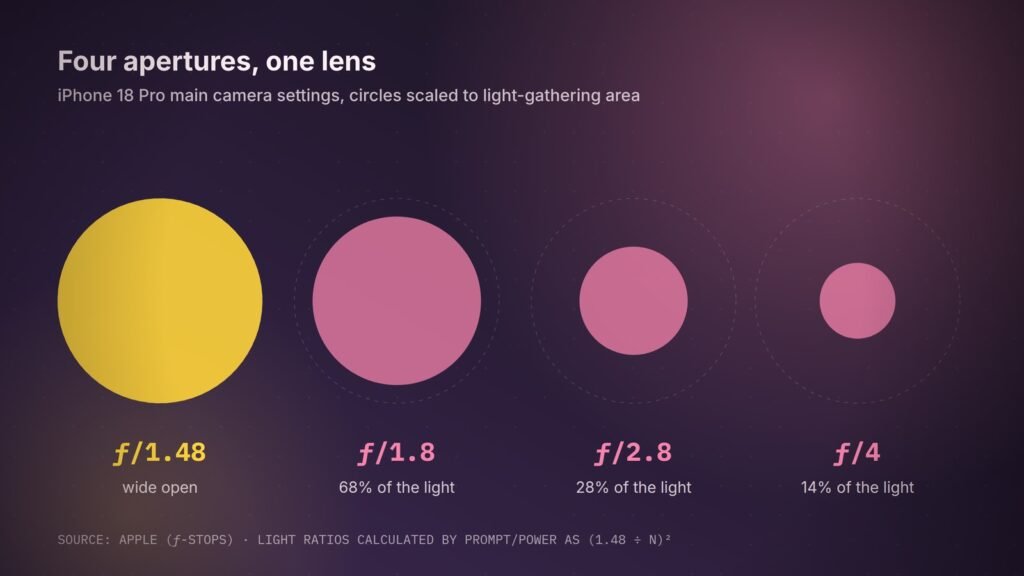
The new 48MP Fusion Main camera has a variable aperture. Six laser-cut blades, Apple says, open and close to move between four settings, from ƒ/1.48 to ƒ/4, and you can pick one yourself in a new set of Pro controls alongside shutter speed, white balance and a live histogram. Until now every iPhone camera has had a fixed aperture, and software has faked the rest: portrait blur, depth effects, night brightening. A physical iris changes that. It gives you real optical control over how much light reaches the sensor and how much of the scene sits in focus.
Why it matters, and why it’s not magic
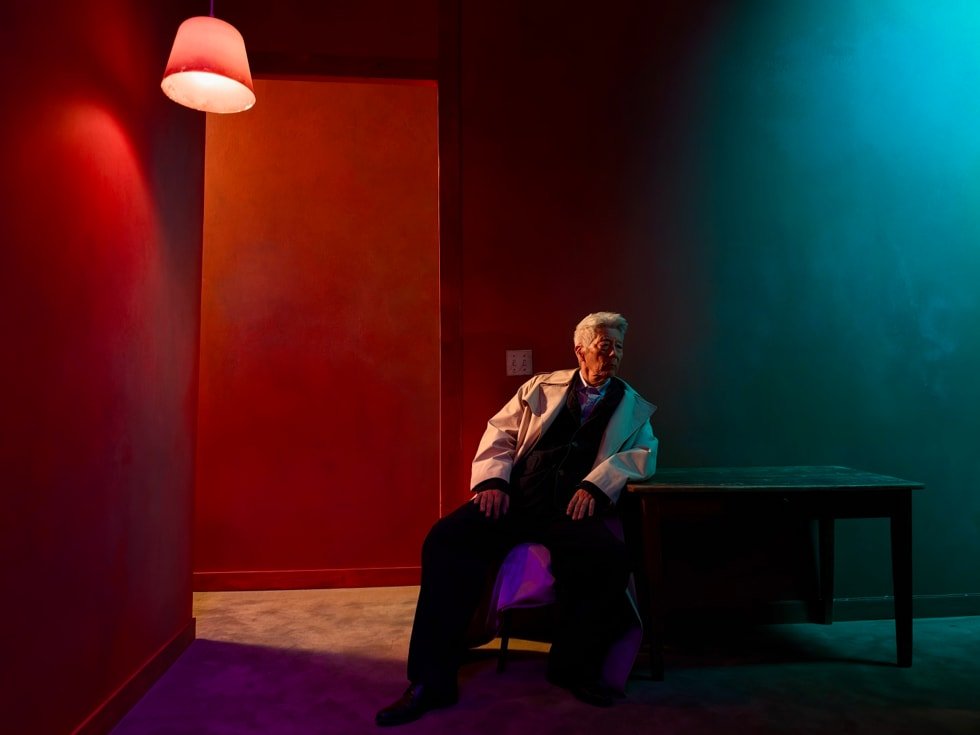
It’s worth being clear about what this does and doesn’t do. On a sensor this small, even the widest ƒ/1.48 setting keeps a lot of the scene in focus, so don’t expect DSLR-style background melt without help from software. The practical wins are subtler: stopping down to ƒ/4 to keep a whole group of people sharp, or opening up to pull in every bit of light at dusk. Apple’s own sample images show exactly that range, from a low-light shot at ƒ/1.48 to a sharp group photo at ƒ/4.
It also isn’t a first for phones. Samsung shipped a dual-aperture camera on the Galaxy S9 in 2018, and Huawei and Xiaomi have since put variable apertures on flagships. What’s new is Apple bringing it to the iPhone, which means a real iris is about to end up in far more pockets.
“We didn’t just make incremental improvements in these areas — we took huge leaps forward to create the best Pro iPhone we’ve ever made,” said Greg Joswiak, Apple’s senior vice president of worldwide marketing. Apple calls this “the most advanced camera Apple has ever made.” The aperture goes a long way toward earning that. Whether the photos do is a question for reviewers shooting in real light.
The rest of the ledger
The rest of the 18 Pro is the annual upgrade, executed well:
- A20 Pro chip, built on a 2-nanometre process, with a vapour chamber Apple says has three times the surface area of last year’s. Together they deliver “up to a 40 percent gain” in sustained performance, which Apple calls “the highest sustained performance yet.” That’s a quiet admission of the problem every phone maker fights: heat slowing things down during long gaming or video sessions.
- Battery: Apple says the Pro Max gets “the largest increase in battery life ever on iPhone,” up to 45 hours of video playback on eSIM-only models.
- A smaller Dynamic Island that can show up to three Live Activities at once.
- A new burgundy finish alongside black, silver and glacier.
Price and availability
The iPhone 18 Pro starts at US$1,199 (CA$1,749) and the Pro Max at US$1,299 (CA$1,899), in capacities from 256GB to 2TB. Pre-orders open Saturday, September 12, with availability Friday, September 18, in more than 65 countries and regions, including Canada.
Two footnotes worth reading twice
Two camera-adjacent features come with caveats that matter more than launch coverage usually lets on.
Apple Reference Image is an opt-in feature that uses digitally signed sensor data to create an unalterable reference copy of a photo, a way to prove what the camera actually captured. It won’t be available at launch in China “because of regulatory requirements,” and in the EU the capture feature won’t be available at launch on the 18 Pro, though users there can still view reference images.
Apple is also adding support for SynthID, Google DeepMind’s watermarking system for flagging AI-generated or AI-edited images. That’s a notable piece of cross-industry cooperation, but it isn’t shipping yet. Apple says it arrives “in a software update later this year” and will cover “most edited images, depending on the edits applied.” At a time when the line between a photograph and a generated image is the whole ballgame, “later” and “most” are words to keep an eye on.
The bottom line
Strip away the annual cadence and the iPhone 18 Pro is a genuinely interesting camera inside an otherwise predictable phone. A moving aperture is the kind of hardware change that outlasts a marketing cycle, because it hands a little creative control back to the person holding the phone. The faster chip, bigger battery, smaller island and new colour are Apple doing what Apple does. Upgrade for the camera. The rest can wait.
Prices are Apple’s U.S. and Canadian list prices. Performance and camera claims are Apple’s, pending independent review.
Sources
- Apple Newsroom: Apple debuts iPhone 18 Pro and iPhone 18 Pro Max (Sept. 9, 2026)
- Apple Newsroom Canada: iPhone 18 Pro (CAD pricing)
- MacRumors: Both iPhone 18 Pro models feature variable aperture (Sept. 9, 2026)
- Android Police: The camera feature Samsung launched years ago
- CNBC: Apple event live coverage (Sept. 9, 2026)

Casie Stewart covers the creator economy, social platforms and wellness tech for prompt/power: who gets paid, who gets seen, and what the algorithm is really asking of the people who feed it. She has been publishing online since 2005, long before "creator" was a job title, and has spent most of that time on the other side of the platforms she now writes about. Based in Toronto. Her rule for any new app: if it promises to save you time, check how much of it you just spent reading the onboarding.
Keep reading


Latest from prompt/power
- Gemini’s Free Tier Shrinks Oct. 9: What You Keep and What Costs ExtraOct 5
- How to Read an AI Company’s S-1: The 7 Numbers That MatterOct 5
- OpenAI’s Safety Lead Quit Over Culture. California’s AG Was Already InOct 5
- When an AI Agent Breaks In, Who Answers for It?Oct 5
- The New AI Models Don’t Talk. They Decide.Oct 5
Leave a Reply