Depth Cameras, Lidar and Cognex’s US$500M Bet on Robot Eyes, Explained
A robot arm hovering over a bin of mixed parcels has a simple problem and a hard one. The simple problem is moving. The hard one is knowing exactly how far away the top box is, which way it’s tilted, and what softer bag it’s hiding underneath. Motors have been good for decades. Seeing in three dimensions, cheaply and reliably, is the part robot makers still shop for.
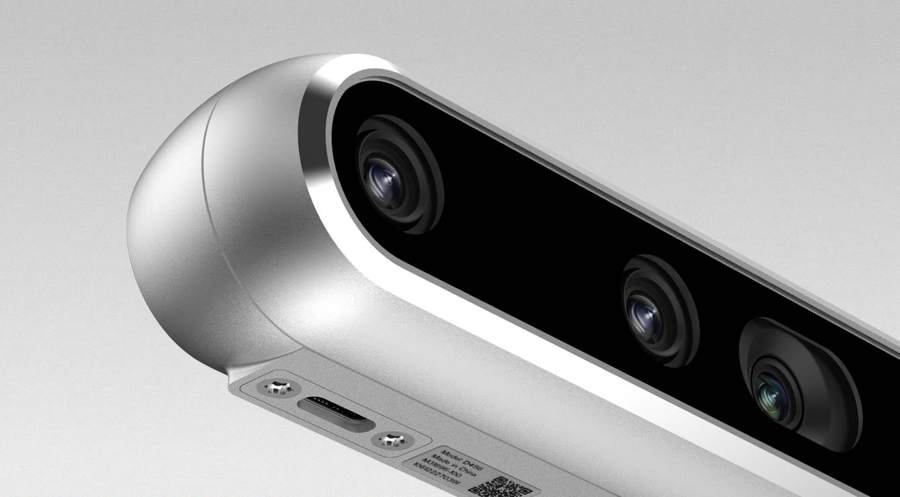
That’s what Cognex bought in September. The Massachusetts machine-vision company agreed to acquire RealSense, the depth-camera maker Intel spun out in July 2025, in a deal expected to close in the fourth quarter of 2026. It’s a useful excuse to explain how robots actually perceive depth, and why a 12-year-old Intel side project became worth hundreds of millions of dollars in about 14 months as an independent company.
$500 million or $600 million? Both, depending on what you count
The coverage split on the price. Robotics & Automation News and Semiconductor Engineering reported US$500 million. SiliconANGLE’s headline said US$600 million. Neither is wrong.
Cognex is paying about US$500 million (about CA$695 million) in cash, funded from existing cash and investments. On top of that sit a three-year cash retention program for RealSense employees worth US$56.5 million (about CA$78.5 million), subject to performance modifiers, and restricted stock units worth roughly US$50 million (about CA$69.5 million). Add them up and you get SiliconANGLE’s “around $600 million.” The purchase price is US$500 million. The cost of buying the company and keeping its engineers is closer to US$600 million.
That distinction matters because, in robotics, the engineers are much of what’s being bought. RealSense had about 180 employees at announcement, according to SiliconANGLE, up from the 130 it started with as an independent company, per The Robot Report. Its facial-authentication business, roughly 25 people, will be spun off separately before the deal closes.
Four ways a machine can see depth
A normal camera flattens the world. Every robot that has to grab, avoid or walk around something needs the missing third number for each pixel: distance. There are four main ways to get it.
Stereo vision
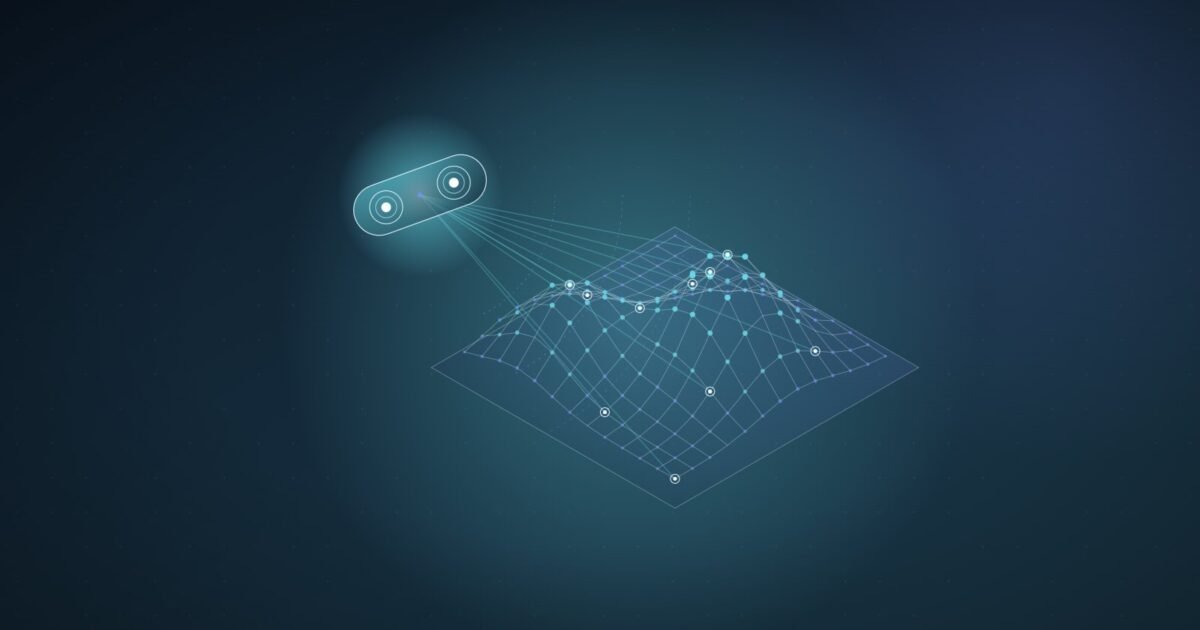
Two cameras, a known distance apart, the way your eyes work. Software matches the same point in both images and measures how far it shifts between them. That shift, called disparity, is inversely proportional to depth: near objects shift a lot, far ones barely move. Stereo is cheap, works in sunlight and scales with ordinary image sensors. Its weakness is matching. A blank white wall or a shiny plastic tote gives the software nothing to lock onto.
Active stereo fixes much of that by adding an infrared projector that sprays an invisible dot pattern onto the scene, giving even featureless surfaces some texture. That’s the approach behind RealSense’s best-known product line, the D400 series of cameras such as the D435 and D455.
Structured light
One camera plus a projector that throws a known pattern of stripes or dots. The system calculates depth from how the pattern bends over surfaces. The original Kinect and the infrared face scanners on phones use variants of it. It can be very precise up close, which is why it’s popular for inspection and 3D scanning, but it’s generally a short-range, indoor technique.
Time of flight
Instead of geometry, measure time. A time-of-flight camera sends out light and measures how long it takes to bounce back, either directly or by reading the phase shift of a modulated signal. It produces a depth value for every pixel at once and doesn’t care whether a surface is textured. The catches: bright sunlight can swamp its own illumination, and light that bounces off two surfaces before returning can make objects read farther away than they are.
Lidar
Lidar is time-of-flight done with lasers, at range. A lidar unit fires pulses and times their return, building a “point cloud” of the surroundings, either by scanning a beam across the scene or by flashing the whole field at once. It’s the most accurate option at distance and the most expensive: Wikipedia’s summary of industry pricing puts sensors at roughly US$1,200 to more than US$12,000 (about CA$1,670 to CA$16,700).
Which robots use which
The rough rule is that cost and working distance decide.
Robotaxis sit at the expensive end. Waymo says its vehicles carry lidar “all around the vehicle,” alongside 29 cameras and radar. When you’re moving at road speed among pedestrians, you pay for redundancy.
Tesla is the famous holdout. Its Tesla Vision approach dropped radar from North American Model 3 and Model Y production in 2021 and moved to an all-camera system with no lidar, betting that neural networks can infer depth from ordinary images. That bet remains contested, but it shows the cost pressure every robot maker feels.
Warehouse robots, humanoids and quadrupeds mostly live in the middle, which is RealSense’s ground. Cognex says RealSense serves perception-guided robot arms, autonomous mobile robots, quadrupeds and humanoids. In 2025, the company told The Robot Report it worked with 60% of developers of autonomous mobile robots and humanoids and had more than 3,000 customers, naming Geek+ and Agility Robotics. Those are RealSense’s own figures. Many of these machines combine sensors, pairing a stereo camera for close work at the “hands” with lidar for navigation.
Factory inspection, Cognex’s home turf, leans on structured light and laser profiling, where a fraction of a millimetre matters and the working distance is short.
Why “physical AI” needs cheap 3D vision
The industry’s current phrase for robots run by learned models is “physical AI,” and Cognex CEO Matt Moschner used it directly. RealSense, he said in the announcement, positions Cognex “to offer a full-stack visual intelligence platform, spanning industrial ID, 2D and 3D machine vision measurement to 3D depth perception and robotic navigation, built to serve the full spectrum of Physical AI.”
A model can learn to fold laundry from video. The robot still has to know exactly where the shirt is.
Our read on why depth sensors become more valuable rather than less as models improve: learned policies are trained on huge amounts of data, and depth gives that data geometry the model doesn’t have to guess. Every new humanoid or mobile robot also needs a sensor bill of materials that works at a robot’s price, not a car’s. A stereo depth camera fits that budget in a way most lidar still doesn’t.
The numbers Cognex cited are modest but steep. It put the robotic perception market at about US$600 million today, growing more than 25% a year to roughly US$1.6 billion by 2030, according to the deal announcement. RealSense expects US$80 million to US$90 million (about CA$111 million to CA$125 million) in 2026 revenue, which Cognex says is more than 50% growth year on year. Those are projections from the buyer, made while selling the deal to its shareholders.
What Intel’s leftovers are worth
Intel launched the RealSense brand in 2014, put early versions into laptops, then pivoted it toward robotics. When it spun the unit out on July 11, 2025, the new company raised a US$50 million Series A from investors including Intel Capital and the MediaTek Innovation Fund.
Fourteen months later, a buyer agreed to pay roughly ten times that round in cash. Intel still benefits: SiliconANGLE reports it kept a 20% stake in RealSense and a board seat.
It’s part of a pattern of Intel selling down businesses outside its core chipmaking. The bigger example is Altera, the programmable-chip maker, where Silver Lake completed its purchase of a 51% stake in September 2025, leaving Intel with 49%. RealSense is a much smaller deal. But it’s the one that went from Intel side project to acquisition target fastest.
For Cognex, the strategic question is whether a company that built its business on cameras watching parts move down a conveyor can sell the eyes for robots that walk off it. The 25 RealSense employees heading out the door with the facial-authentication unit are a small reminder that this deal is about one thing: depth, for machines that move.
Sources
- Robotics & Automation News: Cognex to acquire RealSense for $500 million
- SiliconANGLE: Machine vision company Cognex buys Intel robotics spinoff RealSense for $600M
- Semiconductor Engineering: Chip Industry Week in Review
- The Robot Report: After Intel exit, RealSense maps its own future in 3D vision (July 16, 2025)
- Wikipedia: Intel RealSense
- Wikipedia: Computer stereo vision
- Wikipedia: Structured light
- Wikipedia: Time-of-flight camera
- Wikipedia: Lidar
- Waymo: The Waymo Driver

Elena Vasquez covers space and frontier tech for prompt/power: launches, satellites, robotics, autonomy and defence tech. She counts rocket launches the way some people count sheep, and somehow sleeps less for it.
Keep reading



Latest from prompt/power
- National Medal of Science Goes to Musk, Brin, Huang and Su. Nvidia Pledged US$1BOct 10
- TikTok Placebo Safety Test: New York Says Teens Got a Fake Feed ResetOct 10
- Waymo Takes Its First Loan, US$5 Billion, as Robotaxis Head OverseasOct 10
- Claude Haiku 5.5 Price: 90% Cheaper Until Your Prompt Hits 100K TokensOct 10
- Bell, Virgin, Public Mobile Plan Changes: The New Canadian Price ListOct 10
Leave a Reply