Crew-13 Is in Orbit, and a Canadian Is Riding a Dragon for the First Time
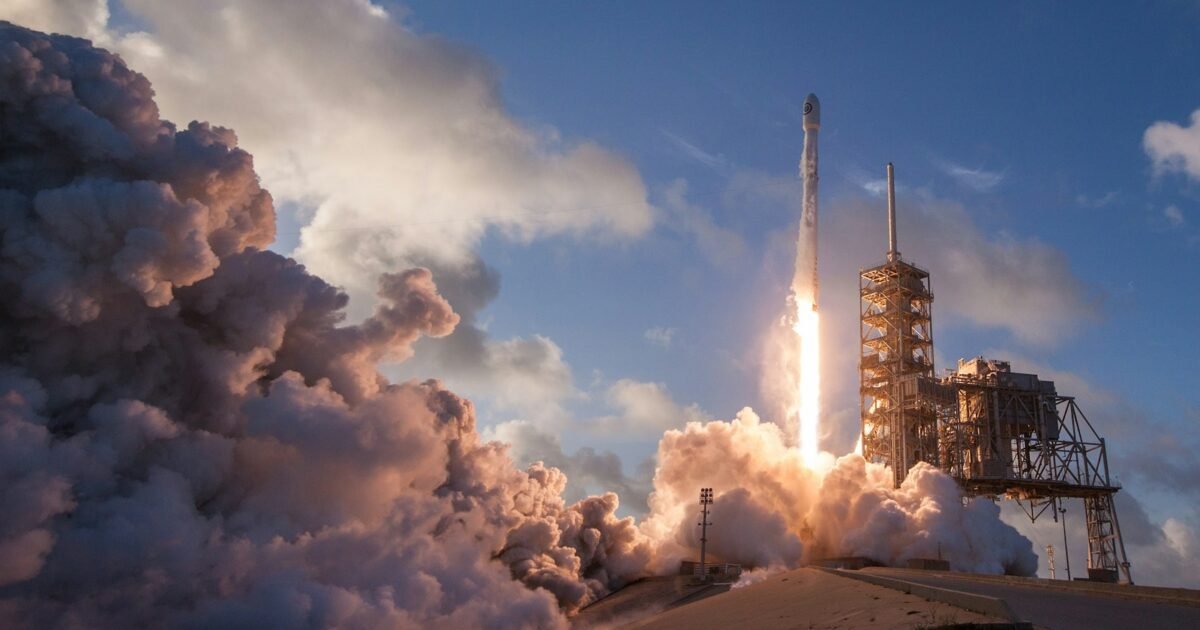
At 11:10 a.m. Eastern this morning, a Falcon 9 lit up Space Launch Complex 40 at Cape Canaveral and pushed four people toward the International Space Station. Roughly eight minutes later the first-stage booster came back down to the Cape and stuck its landing. By the time most of Toronto had finished its coffee, Crew-13 was in orbit.
One of those four is Canadian. That is the part of today worth slowing down for.
Who is on board
The Dragon capsule is Grace, and it is flying with NASA’s Jessica Watkins as commander, NASA’s Luke Delaney as pilot, and two mission specialists: the Canadian Space Agency’s Joshua Kutryk and Roscosmos cosmonaut Sergey Teteryatnikov. Watkins, a geologist, is the only veteran; she flew on Crew-4 in 2022. For Delaney, a former naval aviator, Kutryk, a fighter pilot, and Teteryatnikov, this is a first trip off the planet.
Grace is not new either. The capsule debuted on Axiom Mission 4 in June 2025, the private flight commanded by Peggy Whitson. Crew-13 is its second mission.
Once the crew reached orbit, Watkins radioed a thank-you that played on the capsule’s name:
“They say that courage is grace under pressure, and the incredible teams that got us to orbit today truly embody that.”
— Jessica Watkins, Crew-13 commander, via Space.com’s live coverage
A first for Canada
Kutryk’s seat is a quiet milestone. According to the Canadian Space Agency, it is the first time a Canadian astronaut has flown as part of NASA’s Commercial Crew Program, the arrangement under which private companies like SpaceX carry astronauts to the station instead of NASA owning the ride. It also makes him the fourth CSA astronaut on a long-duration ISS mission.
He comes from the Prairies, was recruited into the CSA’s astronaut corps in 2017, and has logged more than 4,000 hours in over 40 types of aircraft as an engineer, fighter pilot and test pilot. His mission patch leans on three themes: protecting the environment, growing healthy food on Earth and in space, and human health research.
He is also carrying something old. ABC News reports that Kutryk, a fourth-generation Ukrainian Canadian, packed a pocket watch more than a century old. A hundred-year-old timepiece on a capsule trying to set a speed record is a nice bit of symmetry.
The fast lane to the station
That record is the other thing to watch tonight. NASA is targeting docking at the forward port of the station’s Harmony module around 7 p.m. Eastern, with hatch opening planned for about 8:45 p.m. If the timeline holds, the trip of roughly 7 hours and 50 minutes would be the fastest journey a U.S. spacecraft has made to the ISS. Dragon crews have often spent a day or more chasing the station through phasing orbits; compressing it to an afternoon is less about bragging rights than about how little time a crew spends cooped up in a capsule before getting to work.
And the work is the point. The crew joins Expedition 75 for roughly six months. Research on the docket includes studies tied to heart disease and Parkinson’s disease, crop production, and abnormal blood flow. When the handover is done, the Crew-13 astronauts head home.
Routine, which is the remarkable part
It is easy to shrug at a Dragon launch now. This is the 13th operational crew rotation under Commercial Crew, the booster landed like it usually does, and a forecast that gave a 40 percent chance of a scrub didn’t get its way. Watkins put it more generously before liftoff, thanking the teams at NASA, SpaceX, the CSA and Roscosmos who “make the impossible look easy, the extraordinary look routine.”
Routine is exactly what makes a Canadian seat on a commercial rocket possible. The next number to watch is the clock on the docking: 7 p.m., give or take, and a century-old watch along for the ride.
We’ll update this story after docking.
Sources
Andrew Lovesey is the editor-in-chief of prompt/power and the founder of Loveseyland, a Toronto studio that builds worlds and the companies inside them. Before that he spent 12 years at Canadian Geographic and the Royal Canadian Geographical Society, finishing as Director of Digital and Video, and later led the digital practice at Navigator. He is a Fellow of the RCGS and received its Quest Medal for his part in the expedition that located the wreck of Shackleton's Endurance. At prompt/power he covers Apple and writes the big-picture analysis. He has helped find a ship lost for more than a century, and still can't reliably find a phone charger that works.
Keep reading



Latest from prompt/power
- The New AI Models Don’t Talk. They Decide.Oct 5
- Quebec’s First AI Election: ChatGPT Leaned on an AI-Built Voter GuideOct 5
- NYC Is About to Put OpenAI, Anthropic, Google and Meta Under OathOct 4
- The Best AI Video Generators Now That Sora Is GoneOct 4
- Astra, Sol, Argon, Mythos: A Field Guide to AI Model NamesOct 4
Leave a Reply