Apple Watch Series 12 and Ultra 4 Want to Tell You How Ready You Are
Apple has spent a decade turning the Apple Watch from a notification machine into a health device, one sensor at a time. On September 9, it made its biggest leap in years, and it did so at both ends of the lineup.
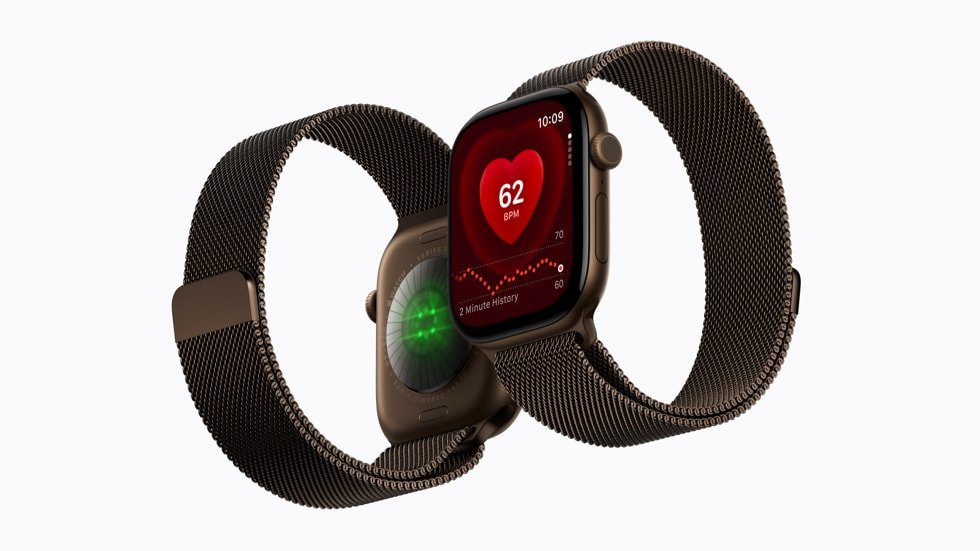
The Apple Watch Series 12 and the rugged Apple Watch Ultra 4 share a re-architected Health Sensing System, with new optical and electrical heart sensors, driven by the new S11, which Apple calls its most powerful wearable chip. Together they take a heart-rate reading every five seconds, all day long, and, Apple says, measure heart rate variability (HRV) up to 24 times more often than before. All that data feeds the headline software feature: a readiness score.
A number for the morning
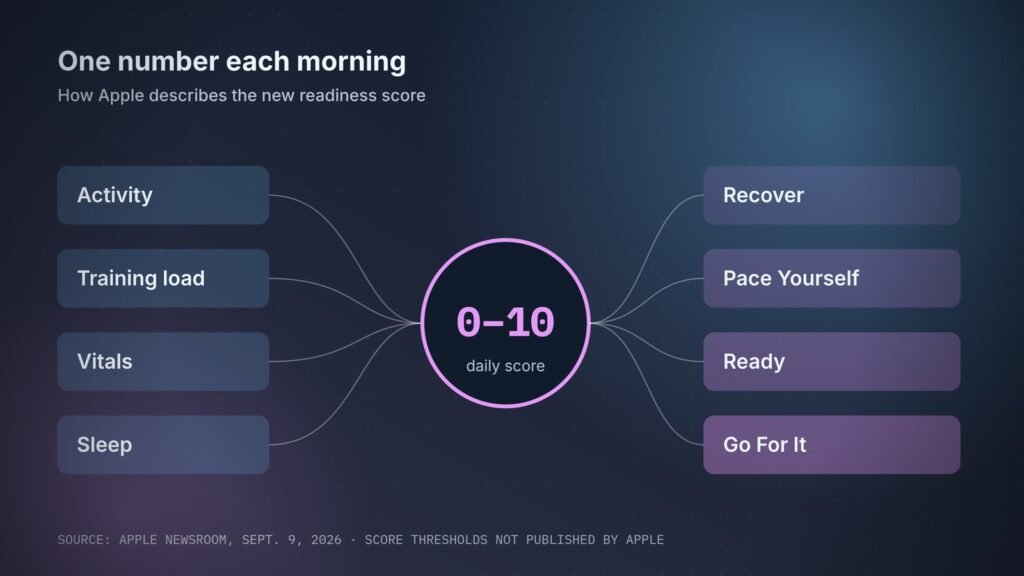
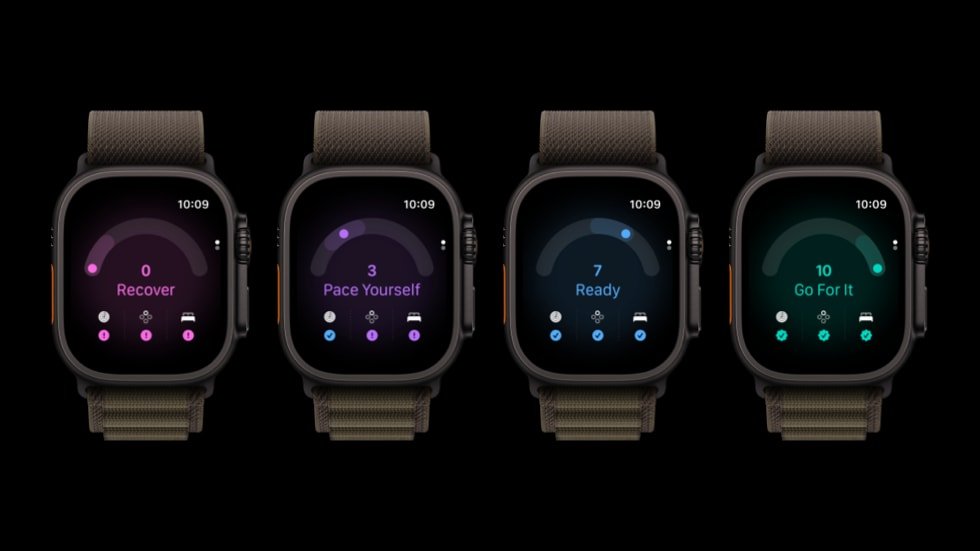
Every day, the watch rolls your activity, training load, vitals and sleep into a single score from 0 to 10, paired with one of four plain-language calls: Recover, Pace Yourself, Ready or Go For It. Apple says the algorithm was built with data from its Apple Heart and Movement Study, working with exercise scientists and physicians.
If that sounds familiar, it should. Oura, Whoop and Garmin have built whole businesses around recovery scores. What Apple brings is scale: the score is built into the watch millions of people already wear, rather than sold as a separate gadget.
“Most accurate,” says Apple
One phrase runs through both announcements: “the most accurate heart rate sensing in a wearable.” Apple’s footnotes tie it to an Apple-conducted study, run in July and August 2026 with more than 1,000 participants, comparing the watch against leading competitors. The Ultra 4 adds “the most accurate on-device GPS in a sports watch,” also Apple-tested, and both models claim “the most accurate step tracking of any smartwatch.”
That’s how every wearable company makes these claims, and Apple’s methodology is published. It’s still Apple testing Apple against rivals Apple chose. Treat “most accurate” as a strong manufacturer claim until independent testers with chest straps and spreadsheets weigh in.
The feature that listens
The newest, and most delicate, capability arrives “later this year.” The S11 enables Audio Intelligence: Sound Recognition for important alerts, Shazam, and two features that will raise eyebrows, Live Rewind, which lets you recall the last 15 seconds of a conversation, and Siri Recap, which summarizes conversations. Apple says the processing happens in a hardware-isolated Secure Exclave on the S11, with no audio recordings created or stored, and Live Rewind and Siri Recap will launch in beta.
That’s a serious attempt to engineer privacy in from the start, and it has real accessibility upside. It’s also a wrist device that listens to what’s happening around you. Both things are true, and the feature couldn’t be demonstrated at launch, so it deserves a close look when it arrives.
Series 12 vs. Ultra 4
The Series 12 is the everyday watch. It comes in 42mm and 46mm sizes, in aluminum (dark bronze, black, light gold and space grey), titanium (radiant gold and natural titanium) and a new ceramic model in pearl white and night blue. Aluminum models get Ceramic Shield 2, which Apple says is 60 percent tougher than the Ion-X glass it replaces. It starts at US$399 (CA$549). “Apple Watch Series 12 is the most advanced health and fitness companion we’ve ever created,” said Kaiann Drance, Apple’s vice president of Worldwide Apple Watch Product Marketing.
The Ultra 4 is the expedition watch, in natural or black titanium. Apple quotes up to 50 hours of everyday battery life, 84 hours in Low Power Mode and up to 45 hours of outdoor workout tracking, plus satellite communications for when you’re well past the last cell tower. Fifteen minutes on the charger adds 18 hours. It starts at US$799 (CA$1,099), and it’s the model that will end up on the wrists of paddlers, backcountry skiers and anyone who has ever been caught out on a portage after dark.
Both run watchOS 27, with Siri AI arriving in beta on September 14. Pre-orders opened September 9, and both reach stores Friday, September 18.
A Canadian footnote
One detail matters for buyers here: Hypertension Notifications, a feature Apple has leaned on as a health differentiator, won’t be available in Canada at launch on either new watch. Apple says regulatory clearances are in process, with availability “expected later this year.” Health features that roll out unevenly by country are a long-running Apple Watch story, and the gap between “announced” and “approved where you live” is real.
The bottom line
The Health Sensing System and readiness score are a substantial upgrade that pushes Apple deeper into territory the recovery-tracker specialists have owned. The “most accurate” branding rests on Apple’s own lab work, and the most intriguing feature, Audio Intelligence, is both unshipped and the one that deserves the hardest questions. These are very good watches, described in superlatives by the only lab that has tested them so far.
Prices are Apple’s U.S. and Canadian list prices. Accuracy claims are based on Apple-conducted studies, pending independent testing.
Sources
- Apple Newsroom: Introducing Apple Watch Series 12 (Sept. 9, 2026)
- Apple Newsroom: Apple unveils Apple Watch Ultra 4 (Sept. 9, 2026)
- Apple Newsroom Canada: Apple Watch Series 12 (CAD pricing, Canada availability)
- Apple Newsroom Canada: Apple Watch Ultra 4
- MacRumors: Apple announces Apple Watch Series 12 (Sept. 9, 2026)

Casie Stewart covers the creator economy, social platforms and wellness tech for prompt/power: who gets paid, who gets seen, and what the algorithm is really asking of the people who feed it. She has been publishing online since 2005, long before "creator" was a job title, and has spent most of that time on the other side of the platforms she now writes about. Based in Toronto. Her rule for any new app: if it promises to save you time, check how much of it you just spent reading the onboarding.
Keep reading

Latest from prompt/power
- Gemini’s Free Tier Shrinks Oct. 9: What You Keep and What Costs ExtraOct 5
- How to Read an AI Company’s S-1: The 7 Numbers That MatterOct 5
- OpenAI’s Safety Lead Quit Over Culture. California’s AG Was Already InOct 5
- When an AI Agent Breaks In, Who Answers for It?Oct 5
- The New AI Models Don’t Talk. They Decide.Oct 5
Leave a Reply